Two Seasons, Two Different Worlds of Birds
Great birding happens where birds concentrate, and birds concentrate for very different reasons. On Florida's Space Coast in winter, it's warmth and water: mild temperatures and open, food rich shallows hold enormous numbers of wading and water birds when the rest of the country is frozen. At Magee Marsh in spring, it's geography: the great barrier of Lake Erie bottlenecks millions of migrating songbirds into a narrow strip of woods. Two different forces, gathering two entirely different casts of birds.
That's the honest truth worth knowing before you book: you won't see the same birds on both trips. Florida's stars are pink spoonbills and long toed gallinules stalking sunlit marshes; Magee's are jewel colored warblers fresh from the American tropics. Far from a drawback, it's exactly why so many birders want both. Together, the Florida Experience and the Magee Marsh Warblers tour during The Biggest Week in American Birding show you the full range of what makes North American birding extraordinary.
Chapter One, Florida's Space Coast: Where Winter Feels Like Summer
While much of the country is frozen, the birds have already figured out what many people never do: the warm weather in Florida is the whole point. Along Florida's Space Coast (the stretch of Atlantic shoreline around Titusville, Merritt Island, and Cape Canaveral), February days sit comfortably in the 70s. For a bird, that warmth is not a luxury. It's survival.
This is why the region is world famous among birders, and why it hosts the celebrated Space Coast Birding & Wildlife Festival each January, one of the largest and longest running birding festivals in the United States, centered on the extraordinary Merritt Island National Wildlife Refuge. Our Florida Experience tour explores this same legendary birding heartland at an unhurried, beginner friendly pace, a short window after the festival crowds have gone home.
Why warm weather means more birds
Warmth is energy. In cold climates, a bird must burn precious calories simply to stay alive through the night, and insect food all but disappears. Florida's mild winter flips that equation: open water never freezes, wading birds feed all day in the shallows, and insects and fish remain abundant. The result is a spectacular concentration of birds packed into the marshes, mudflats, and mangroves, with subtropical wading birds and northern species riding out the winter side by side.
Birds of the Florida Experience
The Space Coast is a stage for some of the most photogenic birds in North America:
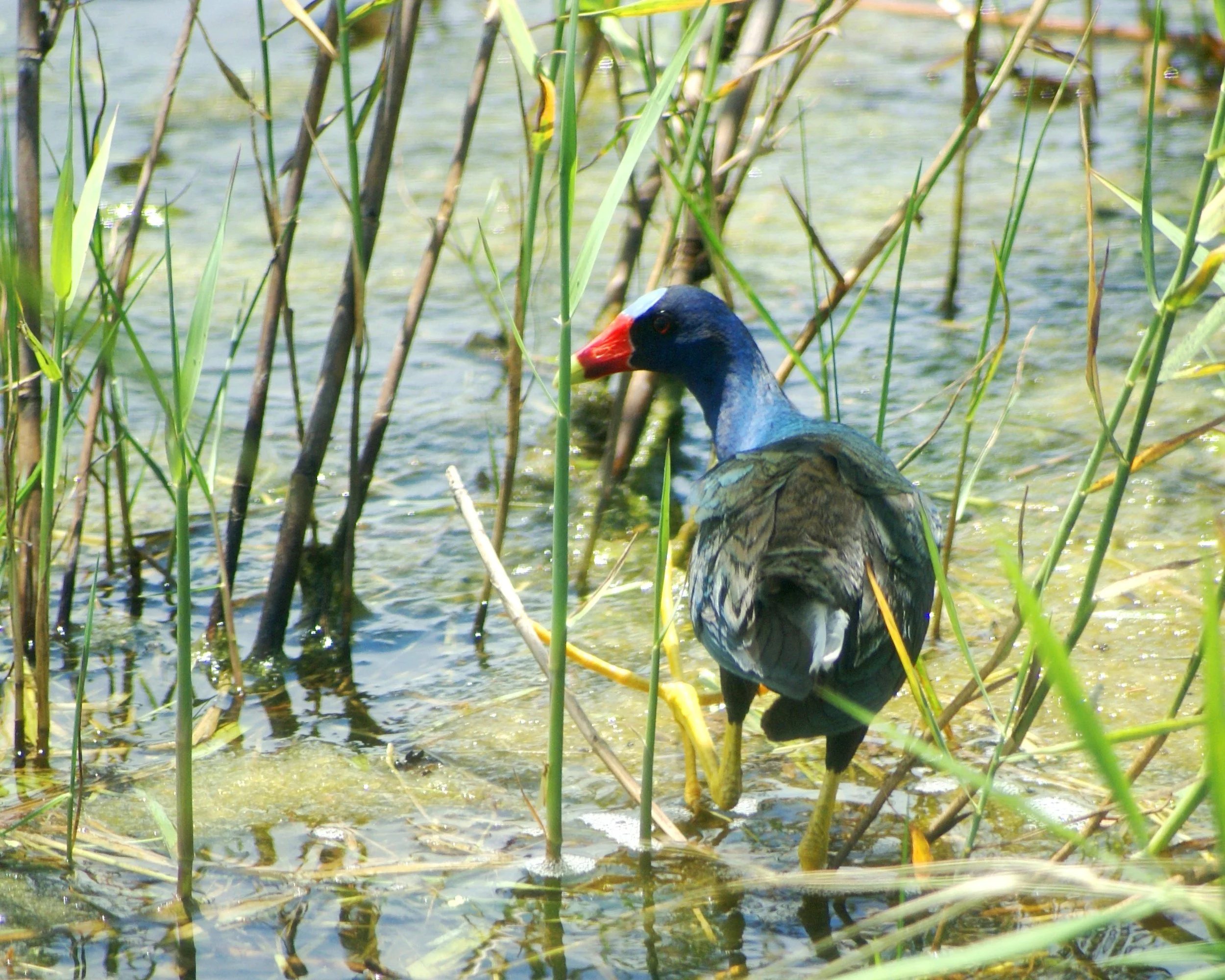
- Purple Gallinule, a walking jewel of purple, green, and gold that strides across lily pads on absurdly long yellow toes.
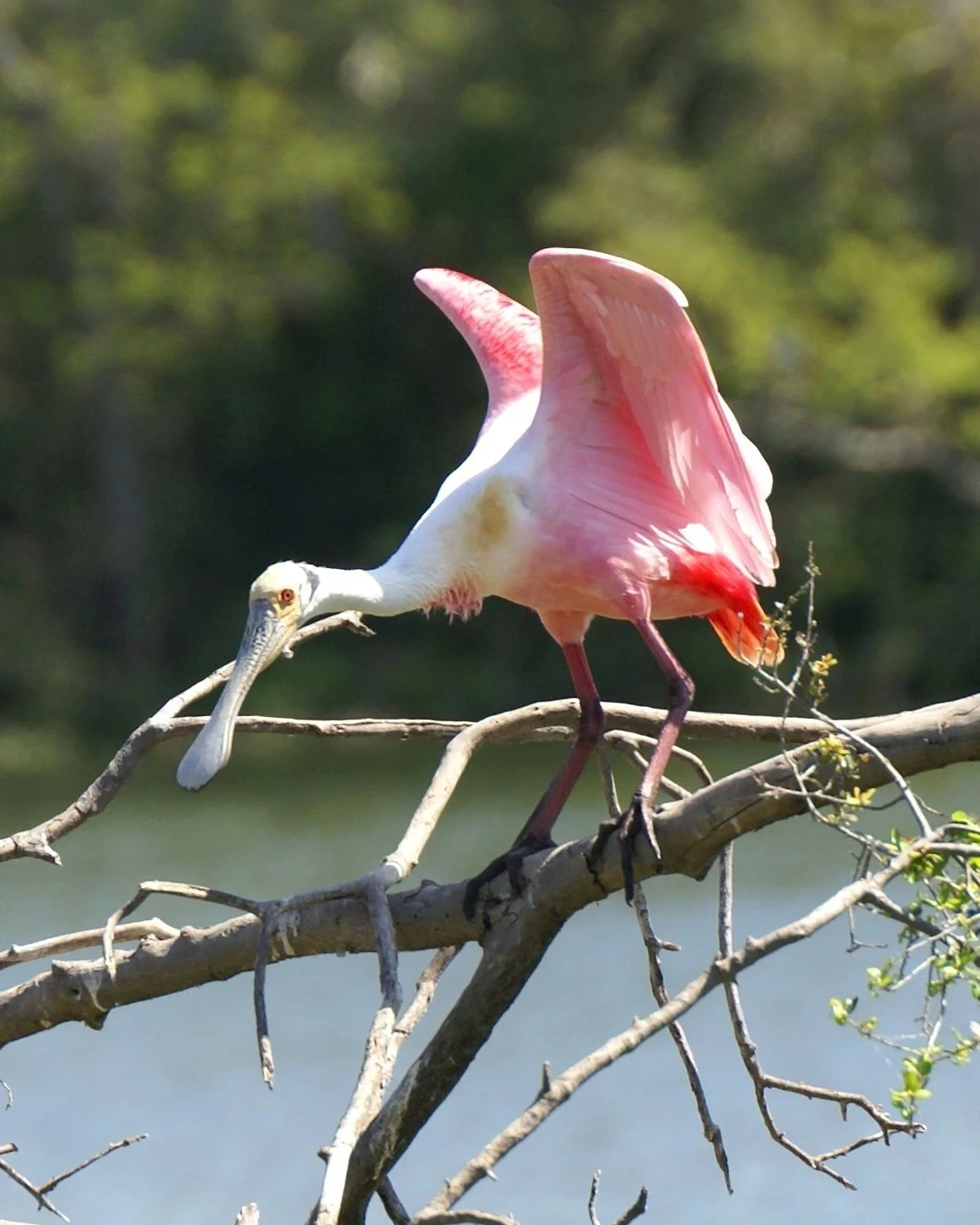
- Roseate Spoonbill, flamingo pink and utterly unmistakable, sweeping its spatula shaped bill through the shallows.
- Wading birds in abundance, from Reddish Egrets dancing after fish to Wood Storks, herons, ibis, and egrets crowding the flats.
- Shorebirds and tropical specialties, from skittering plovers and sandpipers to the warm country species that reach their northern limit here.
For a beginning birder, few places on Earth offer this much color and drama with so little effort. The birds are close, active, and everywhere.

Chapter Two, Magee Marsh: The Warbler Capital of the World
Now shift seasons, and the cast of characters entirely. As spring pushes up the continent, warblers that spent the winter deep in the forests of Central and South America and the Caribbean pour north toward their breeding grounds in the great boreal forests. These are not the birds of the Florida marshes; most of them wintered thousands of miles farther south, and they travel up the interior of the continent. Along the way, an astonishing number funnel into one small strip of woods in northwest Ohio: Magee Marsh.
Each May, the famous Magee Marsh boardwalk becomes the beating heart of The Biggest Week in American Birding, a ten day festival (May 7 to 16 in 2027) that draws tens of thousands of birders from around the globe. Our Magee Marsh Warblers tour, May 9 to 12, 2027, places you right in the middle of it, at the peak of the wave.
The science of the fallout: why so many warblers gather here
The magic of Magee Marsh is pure geography. Migrating songbirds moving north hit the vast open water of Lake Erie, a barrier too wide to cross casually. Like travelers reaching a shoreline, they pause. They pile into the last band of trees before the water to rest and refuel, waiting for favorable winds to make the crossing. That narrow woodland is Magee Marsh, and on a good morning the boardwalk delivers something birders elsewhere only dream of: warblers at eye level, an arm's length away, too busy feeding to mind the crowd.
Birders call these events "fallouts," and no place stages them more reliably. It is the reason Magee Marsh has earned its nickname as the Warbler Capital of the World.
The warblers you'll meet on the boardwalk
Over three unhurried days, the cast can top thirty warbler species. A few of the showstoppers:
- Blackburnian Warbler, the "firethroat," with a blaze of orange that seems to glow against the fresh green leaves.
- Cape May Warbler, tiger striped yellow with a chestnut cheek, a bird many birders wait years to see well.
- Magnolia Warbler, yellow, black, and white, endlessly fanning its tail as it forages low and close.
Add Prothonotary, Bay-breasted, Chestnut-sided, Black-throated Green, and a dozen more, and you begin to understand the addiction. At Magee, the warblers come down to you.
Two Festivals, Two Spectacles
Here is the idea worth carrying home: Florida's Space Coast and Magee Marsh are two different spectacles, not two stops on one bird's journey. The Space Coast is a winter gathering of wading and water birds basking in the warmth; Magee Marsh is a spring river of songbirds racing north from the tropics. Different casts, gathered by different forces: warmth in one, geography in the other. (A handful of hardy warblers, like Palm and Yellow-rumped, do winter in Florida and pass Magee weeks later, but the boardwalk's marquee birds spend the cold months far south of the U.S.) Together the two trips bookend the birding year and show you its full range: the still, sunlit patience of a Florida marsh and the electric, once a year rush of warbler migration.
Both tours are fully all inclusive, with hotel, meals, transportation, expert guiding, spotting scopes, and daily snacks, kept to small, relaxed groups that are equally welcoming to first time birders and seasoned listers.
See Both Chapters for Yourself
Warm winter days on Florida's Space Coast, then the warbler waves of Magee Marsh: two unforgettable tours, one incredible migration.
Florida Experience · Feb 24 to 28, 2027 Magee Marsh Warblers · May 9 to 12, 2027